Marketing / Proposal Presentation Templates: Client-Ready Decks That Win Deals
Marketing and proposal presentation templates help you pitch ideas clearly with a proven flow: context → goals → plan → proof → timeline → investment → next steps. Use this page to choose the right proposal slide deck template type (client proposal, marketing plan, campaign pitch, partnership deck), reuse must-have slides, and keep everything scannable for busy stakeholders.
Why marketing & proposal decks work
Client decks win when the story moves from clarity to confidence: what you recommend, why it works, and what happens next. In contrast, proposals lose deals when the plan feels vague, the proof is missing, or the investment slide arrives too late. A strong template keeps the layout consistent, so your insight – not the formatting – gets attention.
- Faster trust: proof and case studies sit next to key claims.
- Cleaner decisions: options, tradeoffs, and next steps are obvious.
- Quicker edits: reusable sections reduce last-minute redesign.
- Better delivery: scannable slides help stakeholders follow along.
Marketing / proposal presentation template types
Pick the deck type based on the meeting goal. Then keep one narrative thread – context → plan → proof – so the presentation feels cohesive from start to finish.
Client proposal decks (commercial offers)
- Best for: services, agencies, freelancers, B2B offers.
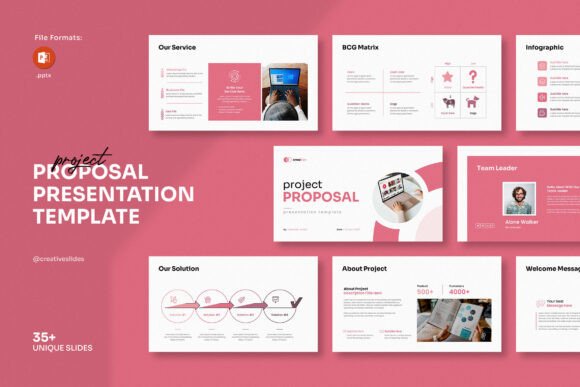
- Key slides: goals, scope, deliverables, timeline, investment, next steps.
Marketing plan decks (strategy & channels)
- Best for: quarterly plans, campaigns, go-to-market planning.
- Key slides: audience, positioning, channel mix, budget, KPIs, calendar.
Campaign pitch decks (creative + execution)
- Best for: brand campaigns, launches, content plans.
- Key slides: big idea, concept visuals, assets list, distribution, measurement.
Partnership / sponsorship decks
- Best for: collaborations, influencers, events, sponsorship offers.
- Key slides: audience stats, placement options, deliverables, pricing tiers, case studies.
Best deck structure (client-ready)
This structure keeps the conversation decision-focused. However, if the audience already knows the context, compress the opening and move straight to the plan and proof.
- Cover + one-liner: what you propose and the outcome.
- Goals: what success looks like (metrics or business results).
- Current situation: key insights (short, not a data dump).
- Strategy: approach and priorities.
- Plan: channels/tactics and what happens week by week.
- Proof: case studies, results, examples, references.
- Timeline: phases, milestones, responsibilities.
- Investment: pricing, packages, what’s included.
- Next steps: decision ask, kickoff plan, contacts.
Must-have slides that close deals
- Executive summary: 3–5 bullets that tell the whole story.
- Scope & deliverables: what you do (and what you don’t).
- Timeline: phases with milestones and owners.
- Proof slide: one strong case study with outcomes.
- Investment slide: clear packages, terms, and what’s included.
Copy formulas that fit proposals & marketing plans
- Recommendation: “We recommend [Plan] to achieve [Outcome] by [Timeframe].”
- Why it works: “This works because [Reason 1] and [Reason 2].”
- Proof line: “In a similar project, we improved [KPI] by [X%].”
- Package clarity: “Package A includes [X]. Package B adds [Y].”
Quick checklist (before you send)
- One takeaway per slide: headings should be conclusions, not topics.
- Proof near claims: put examples next to promises.
- Numbers have context: vs last period, baseline, or target.
- Investment is clear: what’s included, timeline, terms, next step.
- Next step is explicit: what decision you need and by when.
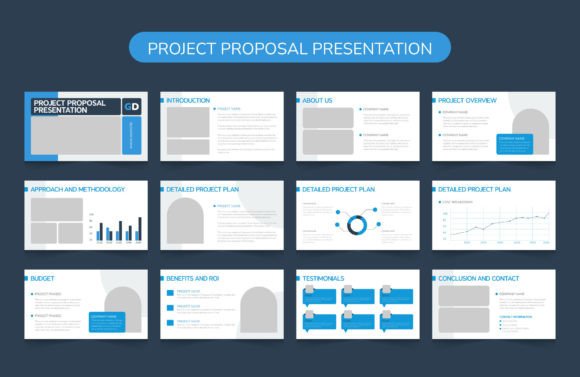
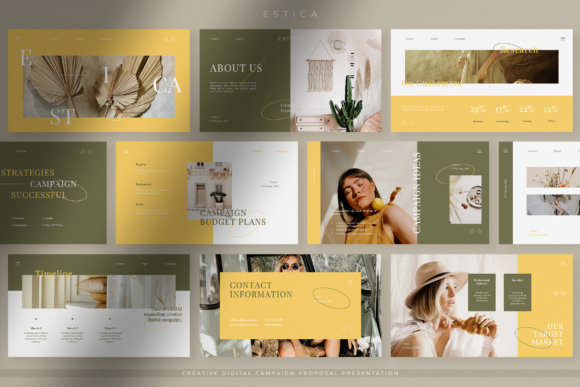
Recommended picks
Start with the deck type that matches your meeting goal, then lock the executive summary first. Next, build the scope and timeline slides so the offer feels concrete. After that, add one strong proof slide and keep the investment section simple.
Client Proposal Decks
Commercial offer layouts with scope, deliverables, timeline, and pricing slides.
View options →Marketing Plan Presentations
Strategy + channel plan decks with KPIs, budget cues, and calendars.
View options →Campaign Pitch Decks
Big-idea and execution decks with visuals, assets, and measurement slides.
View options →Sponsorship / Partnership Decks
Audience stats, placement options, deliverables, and tiered packages.
View options →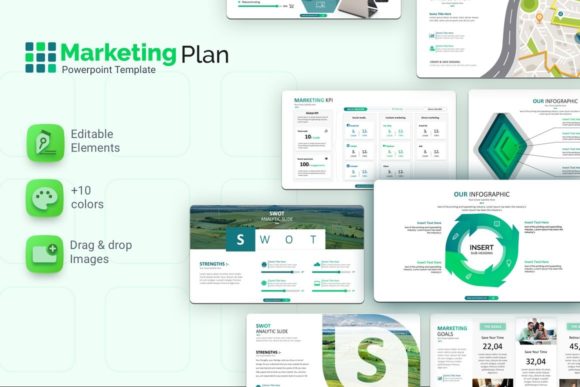
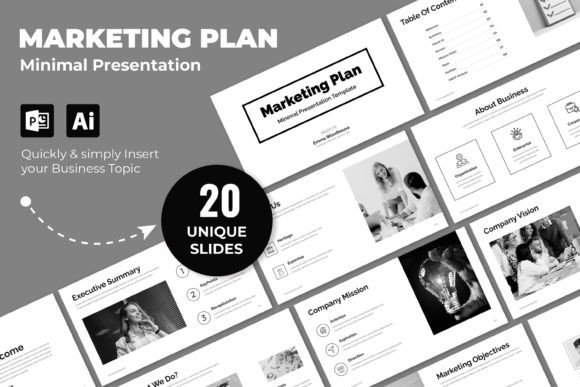
FAQ
How long should a proposal deck be?
For most client proposals, 10–16 slides is enough. If you have heavy detail, add an appendix instead of bloating the core story.
What slide closes deals fastest?
The executive summary plus one strong proof slide. When those are clear, the investment section feels safer and easier to approve.
Related presentation hubs
Business Presentation Templates
Clean slides for meetings, strategy, proposals, and reporting.
Explore →Report Presentation Templates
Marketing and performance report decks with charts and clear takeaways.
Explore →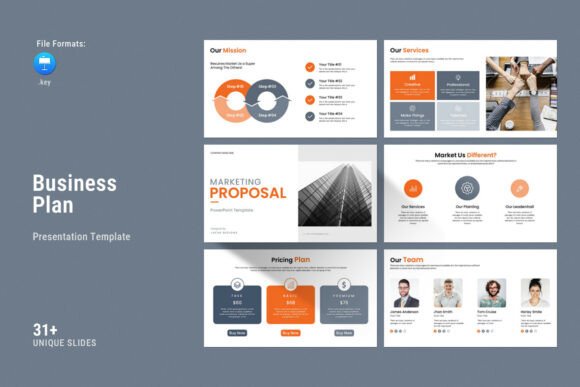
Next step
Choose one deck type, write the executive summary first, and build the scope + timeline slides next. Then add proof right next to the biggest claims and keep the investment section easy to compare. Finally, end with one clear decision ask and a simple kickoff plan.