Lead Generation Landing Pages: Templates Built to Capture More Leads
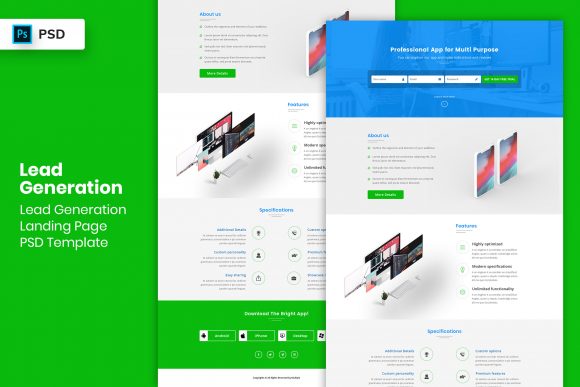
Lead generation landing pages help you turn clicks into contacts with a proven structure: hero → value → form → proof → FAQ → CTA. Use this page to choose the right lead gen template type (lead magnet, quote request, consultation booking, newsletter signup), follow a simple conversion checklist, and customize fast – copy, layout, fields, and trust blocks – without rebuilding from scratch.
Why lead generation landing pages work
Lead gen pages win by removing distractions. Instead of sending traffic to a full website, they focus on one action: submit the form, book the call, or claim the freebie. Most landing pages fail when the offer is vague, the form is too long, or trust is missing. A good template solves the structure so you can focus on the message.
- Clear offer: one promise, one next step.
- Less friction: shorter forms and better field choices.
- More trust: reviews, badges, results, and guarantees near the CTA.
- Better tracking: one page, one conversion goal.
Lead generation landing page template types
Pick a template type based on what you’re asking for: contact info, booking, or signup. Then keep one primary CTA across the page (don’t compete with extra buttons).
Lead magnet / free download pages
- Best for: ebooks, checklists, templates, free trials, quizzes.
- Use when: you want email signups at scale.
- Key blocks: value bullets, preview, short form, instant delivery note.
Quote request / estimate pages
- Best for: local services, contractors, agencies, B2B services.
- Use when: you need qualified leads with project details.
- Key blocks: service scope, “what’s included”, proof, form with 3–6 fields.
Consultation / booking pages
- Best for: coaches, consultants, clinics, studios.
- Use when: you want calls booked, not long forms.
- Key blocks: outcomes, agenda, proof, booking CTA, FAQ.
Newsletter / list-building pages
- Best for: creators, blogs, brands, product updates.
- Use when: you want consistent weekly growth.
- Key blocks: “what you’ll get”, frequency promise, social proof, 2-field form.
Must-have sections (the lead-ready structure)
High-converting lead gen pages are calm and obvious. Visitors should understand the offer and trust it within the first 10 seconds – especially on mobile.
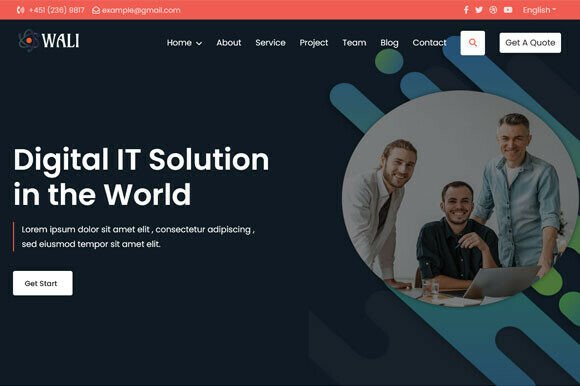
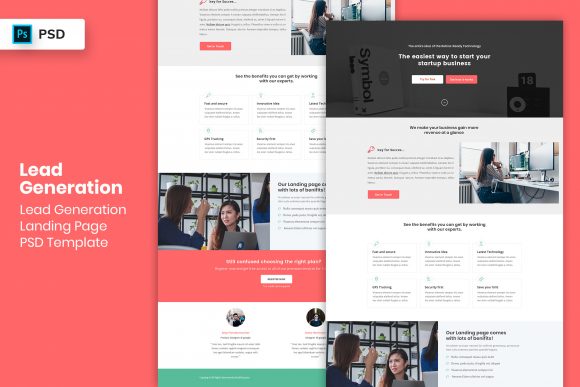
- Hero: offer + outcome + one CTA (Get the guide / Get a quote / Book a call).
- Value bullets: 3–6 benefits focused on outcomes (not features).
- Form block: short fields + privacy note + “what happens next”.
- Proof: reviews, results, logos, ratings, before/after (if relevant).
- FAQ: remove hesitation (pricing, timing, spam concerns, eligibility).
- Final CTA: repeat the offer and keep the same action.
Copy blocks you can reuse (headline + bullets)
Templates convert faster when your copy is specific. Use these “plug-and-play” blocks for most lead generation pages.
Hero headline formulas
- Get [Outcome] in [Timeframe] (example: “Get 20 Leads in 7 Days”).
- [Free Thing] for [Audience] (example: “Free Checklist for New Etsy Sellers”).
- [Service] Quote in Minutes (example: “Roofing Quote in Minutes”).
- Book a [Call Type] to [Outcome] (example: “Book a Strategy Call to Increase Sales”).
CTA button text that works
- Lead magnet: “Get the free guide”, “Send me the checklist”.
- Quotes: “Get a quote”, “Request estimate”.
- Booking: “Book a call”, “Schedule consultation”.
- Newsletter: “Join the list”, “Subscribe”.
Conversion frameworks (copy-paste outline)
Pick one framework and repeat it across your lead gen pages. Consistency improves trust and makes pages easier to scan.
- Offer → Benefits → Form → Proof → FAQ → CTA (best for lead magnets)
- Problem → Solution → Proof → Form → CTA (best for service quotes)
- Outcome → Who it’s for → Agenda → Proof → Booking CTA (best for consultations)
- Promise → Samples → Social proof → Signup → CTA (best for newsletters)
Lead gen checklist (quick wins)
- One primary CTA: don’t compete with multiple actions.
- Short form: ask only what you need to qualify.
- Proof near the form: reviews/ratings close to the CTA.
- Clear “what happens next”: timeline + response expectation.
- Mobile-first: form visible and easy to tap, not buried.
Recommended picks
Start with one lead gen system and keep it consistent: one offer, one CTA, one clean form. Then test headlines and proof placement before you redesign anything.
Lead Magnet Landing Pages
Opt-in pages for checklists, ebooks, and free templates with short forms.
View options →Quote Request Pages
Service quote layouts with proof blocks and a simple qualifying form.
View options →Consultation Booking Pages
Call-first pages built around outcomes, agenda, proof, and one CTA.
View options →Newsletter Signup Pages
Simple opt-in pages with a clear promise, samples, and low friction.
View options →
FAQ
How long should a lead generation landing page be?
Long enough to create trust. If the offer is simple (free checklist), keep it short. If the offer is expensive (service quote), add more proof and FAQs. In most cases: hero → benefits → proof → form → FAQ is enough.
How many form fields should I use?
Use the minimum. Lead magnets usually convert best with 1–2 fields (name optional). Service quotes can use 3–6 fields to qualify, but avoid “interview-style” forms on the first step.
What makes lead gen pages feel trustworthy?
- Specific promise: what the visitor gets and when.
- Proof near the CTA: reviews, logos, ratings, results.
- Privacy note: “No spam” + what happens next.
- Clean design: calm spacing and one primary button.
Related landing page hubs
Landing Page Templates (Main Hub)
Browse all landing page categories and styles in one place.
Explore →Services / Agency Landing Pages
Quote and consultation pages built to convert service leads.
Explore →SaaS Demo / Free Trial Landing Pages
Feature-first pages built for demos, trials, and signups.
Explore →
Next step
Pick one lead gen template type, write one specific promise, and keep the form short. Start by testing the hero headline and proof placement before you redesign the whole page – those two changes usually move conversion the fastest.