Pitch Deck Templates: Investor-Ready Slides for Fundraising
Pitch deck templates help you tell a clear startup story with a proven flow: problem → solution → traction → business model → team → ask. Use this page to choose the right pitch deck presentation template type, follow a simple checklist, and build slides that look clean, confident, and easy to scan.
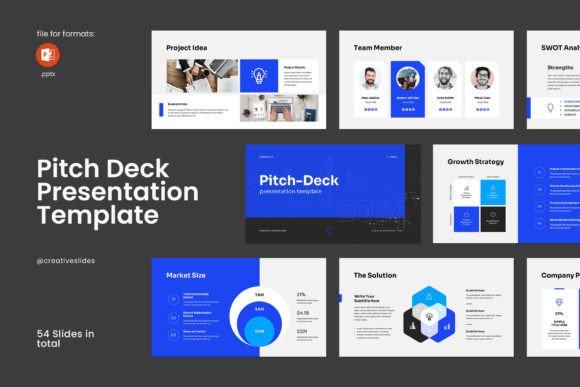
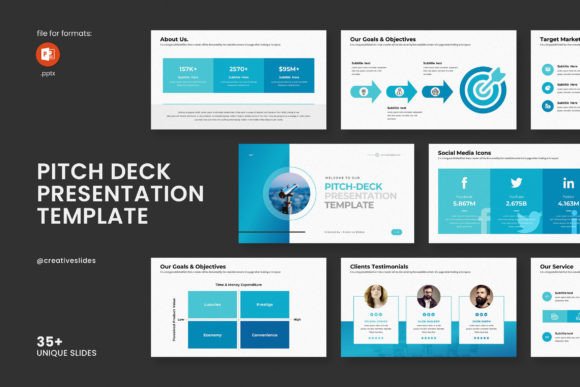
Why pitch deck templates work
Pitch decks convert when the story is obvious in minutes: what you’re building, who it’s for, why now, and what you need. A template removes layout decisions, keeps slides consistent, and helps you focus on clarity and proof.
- Clear narrative: one storyline from problem to ask.
- More credibility: clean spacing, grids, and repeatable slide patterns.
- Faster editing: swap copy and visuals without redesigning.
- Better reading: scannable slides for busy investors.
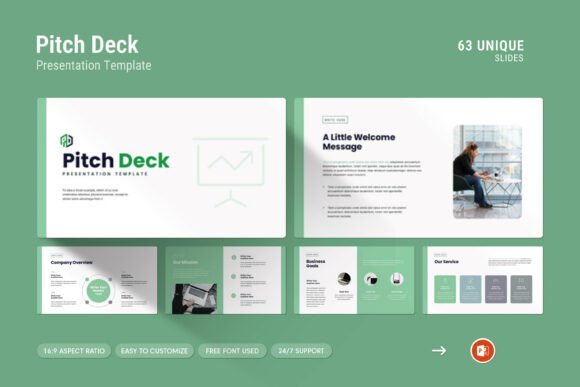
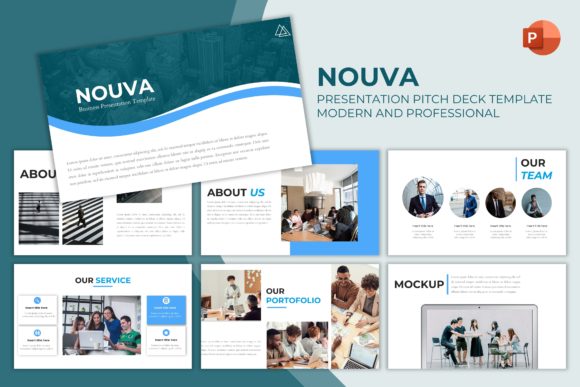
Pitch deck template types
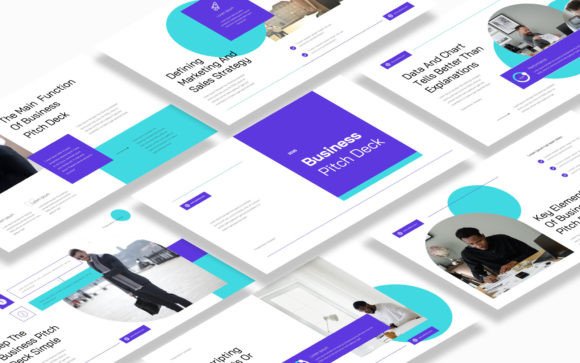
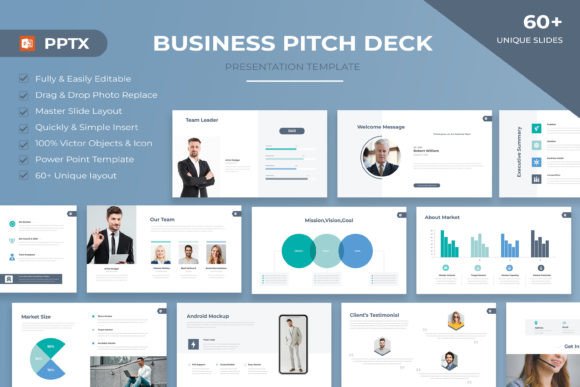
Choose a deck type based on where you are in the fundraising process. Keep one goal per deck: raise, update, or explain.
Fundraising pitch deck (Pre-seed / Seed)
- Best for: first investor meetings and intros.
- Focus: problem, solution, market, traction, team, ask.
Investor update deck
- Best for: monthly/quarterly updates to current investors.
- Focus: highlights, metrics, wins, challenges, next milestones.
Demo Day / Accelerator deck
- Best for: short stage presentations.
- Focus: punchy narrative + traction + clear ask.
Product / Sales pitch deck
- Best for: B2B sales, partnerships, enterprise conversations.
- Focus: use cases, ROI, case studies, workflow, pricing cues.
Pitch deck structure
A strong pitch deck is calm and predictable. Use this order as a default; then adjust by stage and traction.
- Cover: one-line value proposition.
- Problem: who hurts and why it matters.
- Solution: what you built and the core benefit.
- Why now: timing, trends, catalyst.
- Market: TAM/SAM/SOM in simple terms.
- Traction: growth, revenue, retention, pilots.
- Business model: how you make money.
- Go-to-market: channels and sales motion.
- Competition: your edge, not a feature dump.
- Team: why you can win.
- Ask: amount, runway, and what it funds.
Must-have slides (investor-ready)
- One-slide clarity: each slide = one idea, one takeaway.
- Proof-first: metrics, screenshots, logos, testimonials where relevant.
- Simple charts: 1–2 key visuals beat dense dashboards.
- Consistent design: same grid, spacing, and typography across the deck.
- Appendix: deeper details (unit economics, pipeline, research) at the end.
Copy formulas that work on pitch decks
- [Product] for [Audience] that delivers [Outcome]
- We help [Audience] do [Job] without [Pain]
- Replace [Old way] with [New way]
- Traction slide: “From X to Y in Z months”
Frameworks (copy-paste outlines)
- Problem → Solution → Why now → Traction → Ask (best all-around)
- Customer story → Product → Proof → Business model → Ask (best narrative)
- Market pain → ROI → Case study → Process → Next step (best B2B sales)
Pitch deck checklist (quick wins)
- Clear one-liner: the cover slide makes sense in 5 seconds.
- One goal: raise / update / sell – don’t mix.
- One idea per slide: remove extra paragraphs.
- Proof near claims: show metrics next to promises.
- Readable on laptop: big text, calm spacing, short bullets.
- Ask is specific: amount + runway + use of funds.
Recommended picks
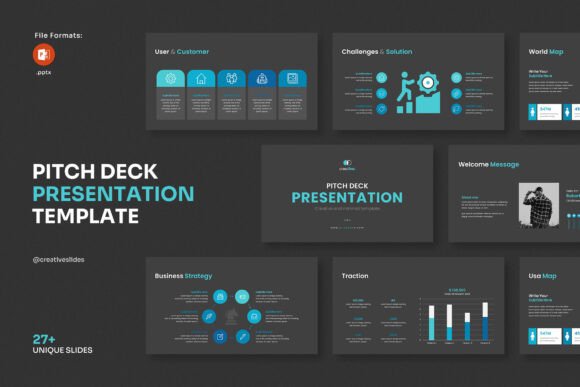
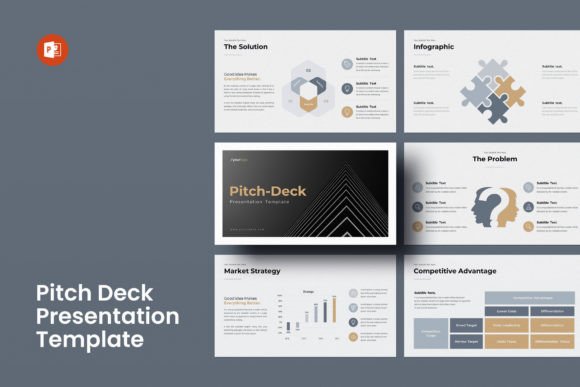
Start with one clean deck style and keep it consistent. Then tighten the cover one-liner and the traction slide first – those two usually move investor interest the fastest.
Pitch Deck Templates
Clean fundraising decks with a proven problem → solution → traction flow.
View options →Startup Pitch Deck Slides
Slide packs for traction charts, market slides, and “ask” layouts.
View options →Business Model & Pricing Slides
Simple tables and plan layouts that make monetization easy to understand.
View options →FAQ
How long should a pitch deck be?
Most fundraising decks work best at 10–14 slides plus an appendix. Keep it short enough to skim, but long enough to prove the key points.
What slide matters most?
Your cover one-liner and your traction slide. If those are clear and convincing, the rest of the deck gets read with more trust.
Related presentation hubs
Business Presentation Templates
Meeting-ready decks for strategy, team updates, and internal reporting.
Explore →Report Presentation Templates
Marketing and performance reports with charts and clear takeaways.
Explore →Webinar Slide Templates
Slides that support speaking flow and keep attention on key points.
Explore →Next step
Pick one deck type, write one clear one-liner for the cover, and build a traction slide with one simple chart. After that, tighten the ask and move proof closer to the biggest claims.