Templates Built To Win More Clients
Services / agency landing pages help you turn traffic into inquiries with a proven flow: hero → offer → proof → process → FAQ → CTA. Use this page to choose the right service landing page template type (agency, consulting, quote request, booked call), follow a quick conversion checklist, and customize fast – copy, sections, proof blocks, and CTAs – without rebuilding from scratch.
Why services / agency landing pages work
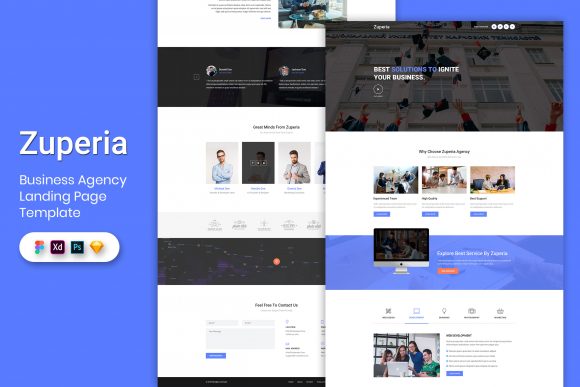
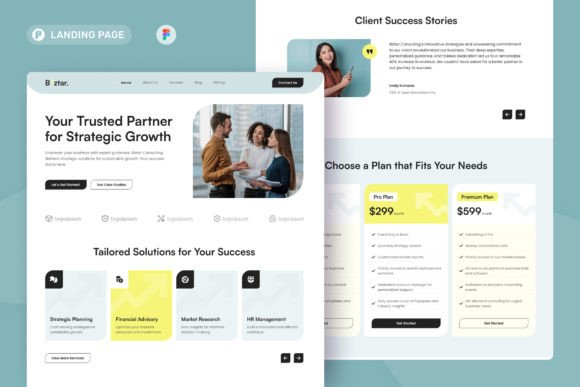
Service pages convert when they remove uncertainty: what you do, who it’s for, what results to expect, and how to start. Most pages fail because the hero is vague, the offer is unclear, proof is missing, or the CTA competes with other actions. Templates fix the structure so you can focus on one promise and one primary CTA.
- Clear offer: one outcome + one next step (book / request quote).
- Trust faster: testimonials, logos, case studies near the CTA.
- Less friction: short forms and obvious “what happens next”.
- Better qualification: ask only what you need to route the lead.
Services / agency landing page template types
Pick the template based on your business model and lead type. Keep one primary CTA across the page (Book a call / Request a quote / Get proposal).
Agency lead pages (case studies first)
- Best for: marketing agencies, design studios, dev teams.
- Key blocks: positioning → case studies → process → CTA.
- CTA: “Book a discovery call”, “Request proposal”.
Quote request / estimate pages
- Best for: services with clear scope (local services, contractors, B2B).
- Key blocks: what’s included → proof → short form (3–6 fields).
- CTA: “Get a quote”, “Request estimate”.
Consulting / strategy call pages
- Best for: consultants, coaches, experts, fractional roles.
- Key blocks: outcomes → who it’s for → agenda → proof → booking CTA.
- CTA: “Schedule a consultation”.
Service packages / retainers
- Best for: fixed packages and monthly retainers.
- Key blocks: packages → inclusions → results → FAQ → CTA.
- CTA: “Choose a package”, “Apply to work together”.
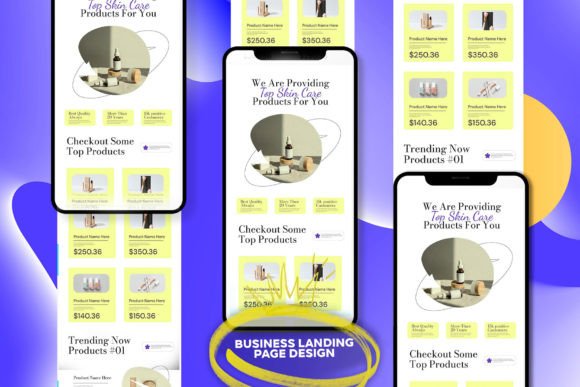
Must-have sections (the client-ready structure)
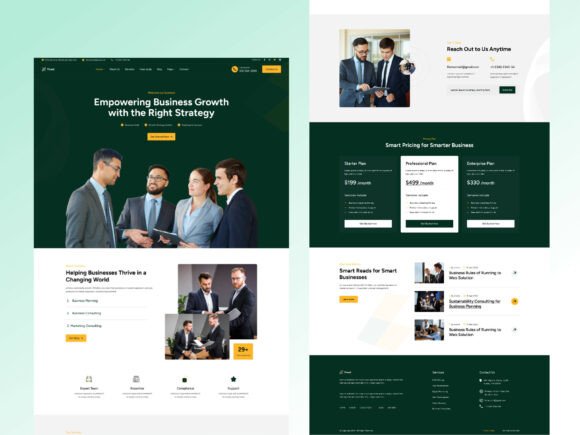
High-converting service pages are calm and scannable. Visitors should understand the offer and trust you within the first 10 seconds – especially on mobile.
- Hero: what you do + who it’s for + outcome + one CTA.
- Offer clarity: 3–6 service blocks focused on results.
- Proof: testimonials, logos, metrics, before/after (if relevant).
- Process: simple 3-step “How it works”.
- Pricing cue: starting price / range / “from…” (or explain why not).
- FAQ: timeline, inclusions, expectations, next steps.
- Final CTA: repeat the same action, no competing buttons.
Copy blocks you can reuse
Service pages convert faster when your copy is specific. Use these plug-and-play blocks to tighten the message.
Hero headline formulas
- [Service] for [Audience] (example: “Web design for local clinics”).
- Get [Outcome] without [Pain] (example: “Get more booked calls without a confusing site”).
- [Audience] + [Outcome] in [Timeframe] (example: “Launch in 10 days”).
- [Offer] built to [Outcome] (example: “Landing pages built to capture qualified leads”).
CTA button text that works
- Calls: “Book a call”, “Schedule consultation”.
- Quotes: “Request a quote”, “Get estimate”.
- Proposals: “Request proposal”, “Get a plan”.
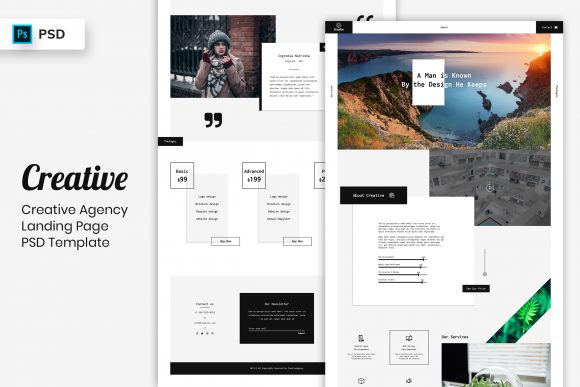
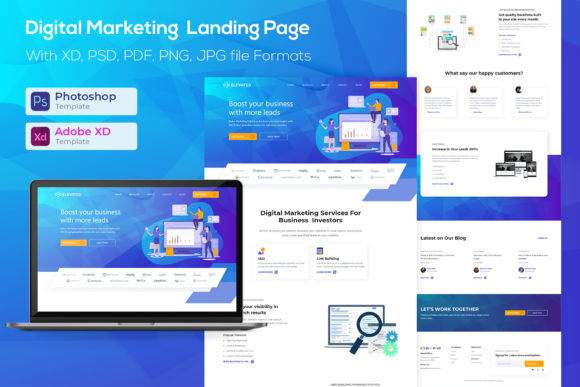
Conversion frameworks (copy-paste outline)
- Promise → Services → Proof → Process → CTA (best for most service pages)
- Problem → Solution → Case Studies → Packages → CTA (best for agencies)
- Outcome → Who it’s for → Agenda → Proof → Booking CTA (best for consulting)
- Scope → What’s included → Proof → Quote form → CTA (best for estimates)
Conversion checklist (quick wins)
- One primary CTA: don’t compete with multiple actions.
- Proof near the CTA: testimonials/logos close to the button or form.
- Short form: ask only what you need (3–6 fields max).
- Clear next step: response time + what happens after submission.
- Mobile-first: CTA visible early, big tap targets, short sections.
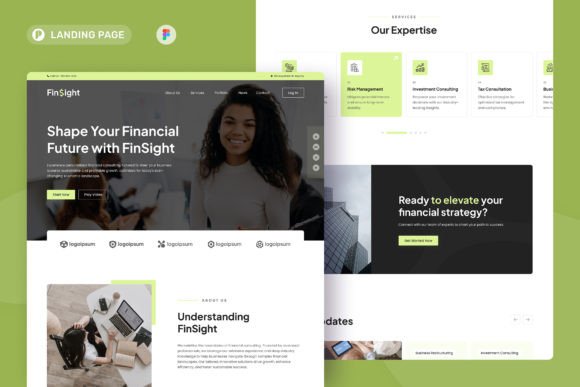
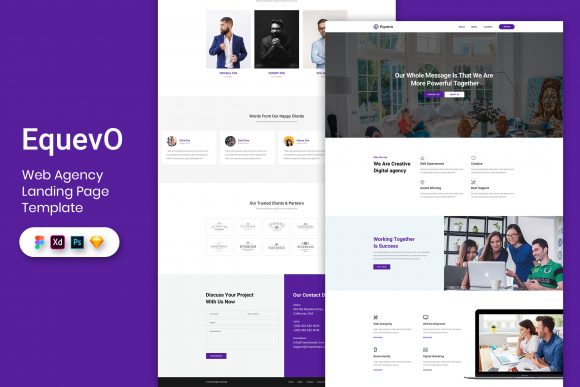
Recommended picks
Start with one system: clear hero + proof + one CTA. Then improve conversion by testing headline specificity and proof placement (faster than redesign).
Service Quote / Estimate Pages
Offer + proof + short form pages designed to qualify leads.
View options →Consulting / Strategy Call Pages
Outcome-first pages built around agenda, proof, and booking CTAs.
View options →Service Packages / Retainers
Package layouts with inclusions, pricing cues, and FAQ blocks.
View options →FAQ
How long should a service / agency landing page be?
Long enough to create trust. For simple services: hero → services → proof → CTA. For higher-ticket offers: add case studies, process, and a stronger FAQ.
How many form fields should I use?
Use the minimum to qualify. For booked calls: name + email (optional phone). For quotes: 3–6 fields. Avoid “interview-style” forms on step one.
Related landing page hubs
Landing Page Templates (Main Hub)
Browse all landing page categories and styles in one place.
Explore →SaaS Demo / Free Trial Landing Pages
Feature-first pages built for demos, trials, and signups.
Explore →Next step
Pick one primary CTA (book a call or request a quote), write one specific promise, and add proof right next to the CTA. Then test your hero headline and proof placement before redesigning – those two changes usually move conversions the fastest.