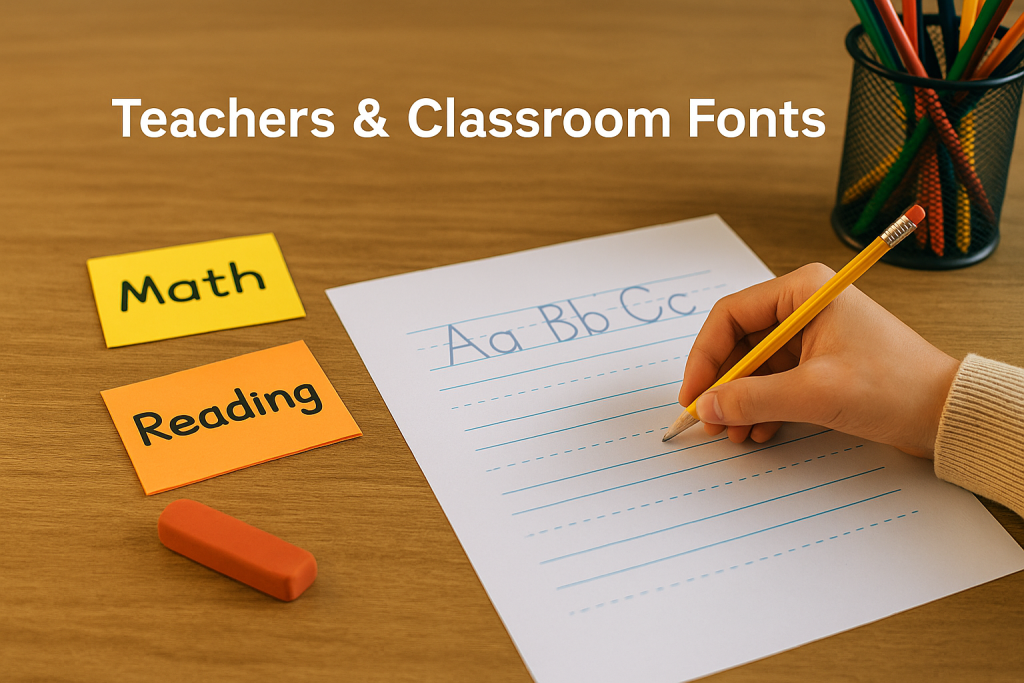
This guide to teachers & classroom fonts shows how to pick neat handwriting, dashed tracing and clean sans for worksheets, labels and bulletin boards – plus quick sizing rules so students can read with ease.
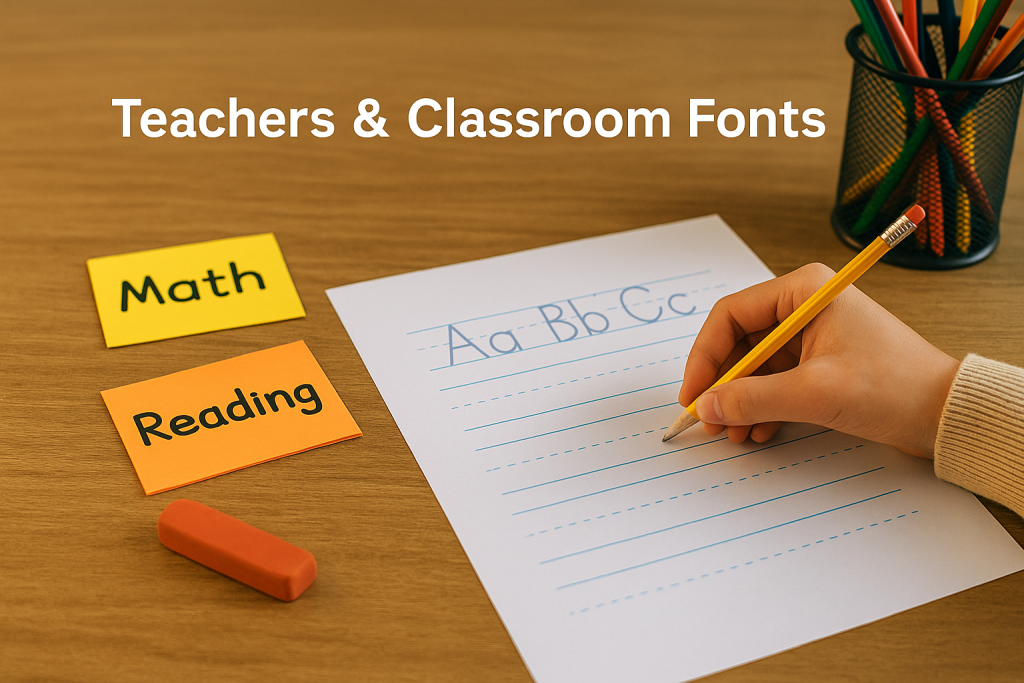
Editor’s top picks – Teachers & Classroom Fonts
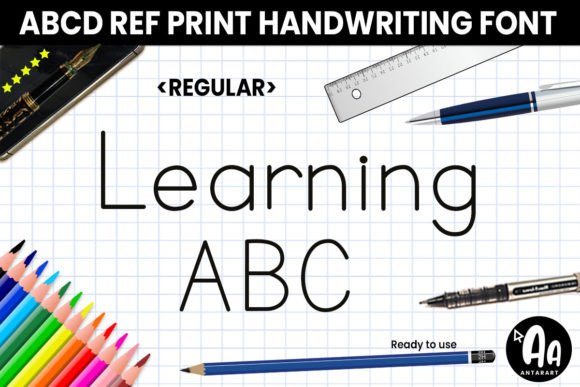
Neat Handwriting
Friendly, balanced letterforms for daily worksheets and labels.
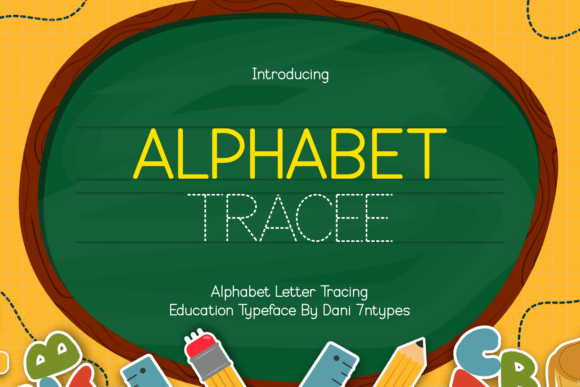
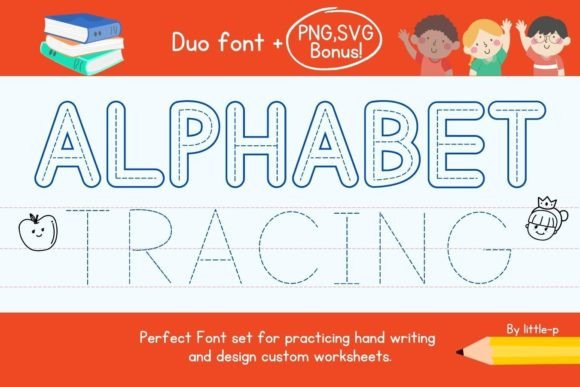
Dashed Tracing
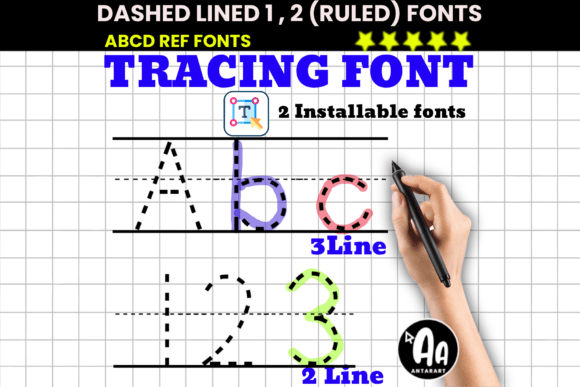
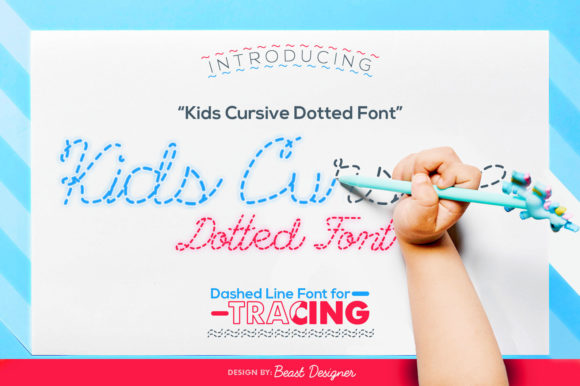
Dashed strokes with correct baseline/x-height for practice sheets.
Primary Print (Block)
Simple, open shapes; single-storey a and g preferred for early readers.
Cursive / D’Nealian
Entry/exit strokes for cursive drills and penmanship posters.
Classroom Sans
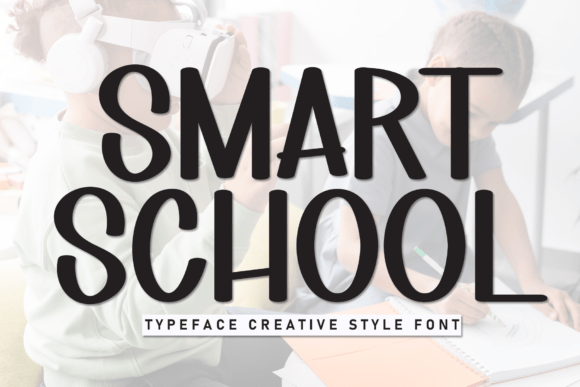
Rounded, clear sans serif for schedules, signage and rules.
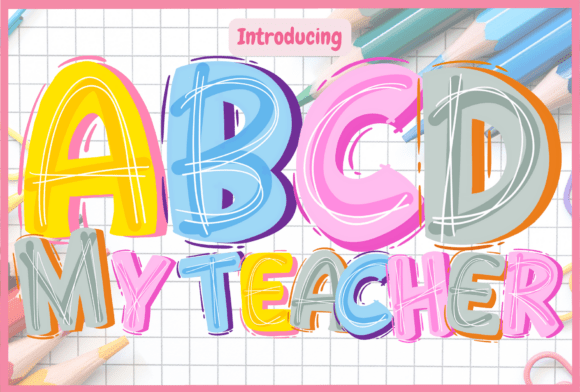
Bulletin Letters
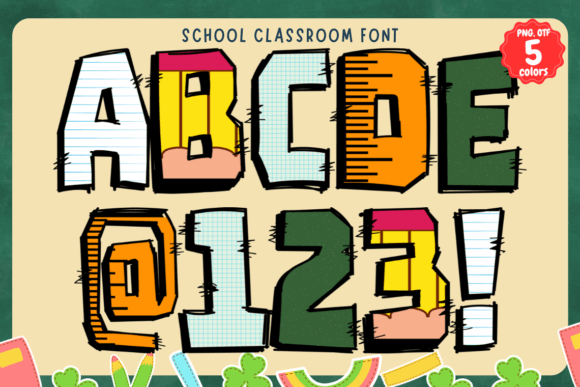
Big, punchy display sets for boards, doors and hallway posters.
Numbers & Math
Aligned numerals and math symbols for counting and operations.
Classroom text tools
- Custom handwriting worksheets – name practice, A–Z, numbers 0–100.
- Turn your handwriting into a font – create a class-specific typeface.
- Editable PDF worksheet setup – fillable fields and print-ready margins.
How to choose teachers & classroom fonts
- Early readers: prefer single-storey a and g, open apertures, clear l/I/1 distinction.
- Line metrics: consistent x-height and baseline; tracing fonts should match your ruled paper.
- Spacing: add 2–5% tracking for beginner worksheets; avoid overly tight kerning.
- Weight: regular to medium for print; tracing dashes should be visible but not heavy.
- Language support: include accents (á, ñ, ü) and math symbols if you need them.
Try searches (classroom-ready)
- Handwriting Practice → A–Z practice sets
- Dashed Tracing → Tracing fonts
- Primary Print → Primary alphabets
- Classroom Sans → Clean sans options
- Bulletin Letters → Big display sets
- Numbers & Math → Counting & symbols
- Alphabet Posters → Wall charts
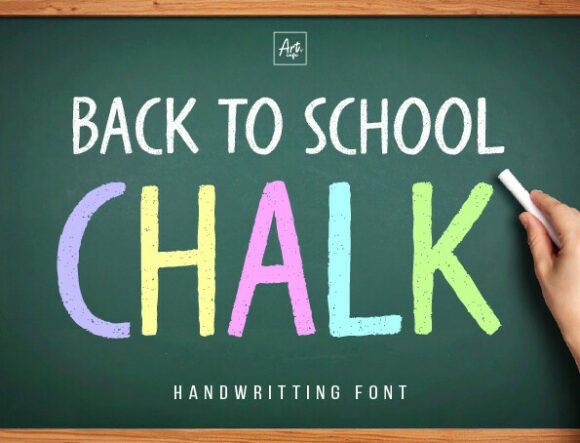
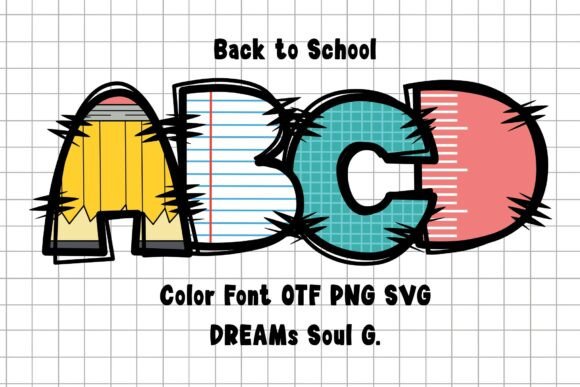
Font pairing recipes
- Classroom Sans + Handwriting – Sans for headings/labels, handwriting for example lines. Sans ideas · Handwriting ideas
- Primary Print + Dashed Tracing – Model line + trace line under it. Primary sets · Tracing sets
- Bold Display + Clean Sans – Hallway posters and bulletin titles. Display picks · Clean sans
Classroom projects you can ship today
- Handwriting packets: A–Z upper/lowercase, numbers 0–20, name practice pages.
- Word wall & labels: high-contrast cards for subjects, bins and centers.
- Schedule & routines: large-type cards for daily agenda and stations.
- Alphabet posters: model letter + key image; keep consistent baseline.
- Math mats: number lines, ten frames, operation symbols, clock faces.
- Behavior charts & stickers: use dingbats/icons for quick rewards.
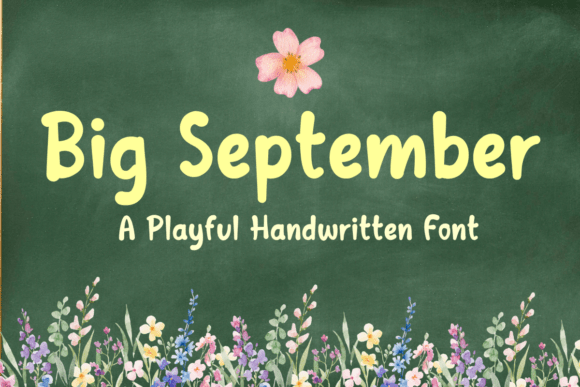
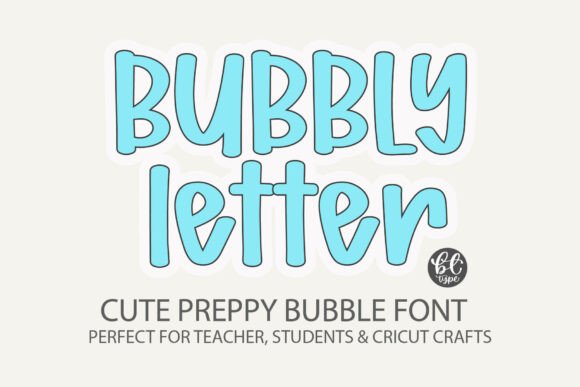
Quick sizing rules (print & distance)
- Worksheets: lowercase x-height ≈ 4–6 mm (≈ 14–20 pt) for early grades.
- Labels at desk: 24–36 pt; hallway posters: 150–200 pt for 3–4 m viewing.
- Tracing dashes: dash length 2–3 mm with 2–3 mm gaps; line height 18–24 mm.
Licensing: classroom essentials
- Classroom use: a standard commercial license usually covers printed classroom materials.
- No redistribution: do not share or bundle the font file with students or colleagues.
- Digital worksheets: for PDFs you sell/share, outline text or flatten to images if the EULA restricts embedding.
- Seats/users: one license per teacher/device unless the EULA allows more.
FAQ
Which teachers & classroom fonts are best for beginners?
Primary print with single-storey a and g, open counters and generous spacing.
Can I use these fonts in worksheets I sell?
Usually yes with a commercial license for static designs; never include the font file itself.
Do I need special tracing fonts?
Dedicated dashed/triple-line fonts save time and match standard ruled paper heights.
Curated quick picks
- Neat handwriting: Browse
- Dashed tracing: Browse
- Primary print: Browse
- Classroom sans: Browse
- Bulletin letters: Browse
- Numbers & math: Browse
Wedding Fonts
Elegant scripts & refined serifs for invitations, menus, signage and day-of details.
Logos & Branding Fonts
Clean, memorable display & versatile sans/serifs for wordmarks and brand systems.
Cricut & Silhouette Fonts
Cut-friendly (fewer inner holes), bold display and smooth scripts that weed easily.
Laser Cutting & Engraving Fonts
Stencil, single-line & sturdy forms that survive small bridges and fine engravings.
Social Media & Canva Fonts
Scroll-stopping display with strong contrast and clarity at small mobile sizes.
Etsy & Printables Fonts
Trendy sets for wall art, planners, labels and templates – commercial-use friendly.
Headlines & Posters
Impactful display families for banners, price tags, thumbnails and hero graphics.
Tattoo Fonts
Script, blackletter and vintage sets with legible strokes and balanced contrast.
Monogram Fonts
Circle/diamond styles, intertwined initials and elegant caps for gifts & linens.
Invitations & Cards
Readable pairings (display + body) for RSVPs, place cards, thank-you notes.
Kids & School Fonts
Friendly, chunky and classroom-safe sets for worksheets, labels and bulletin boards.